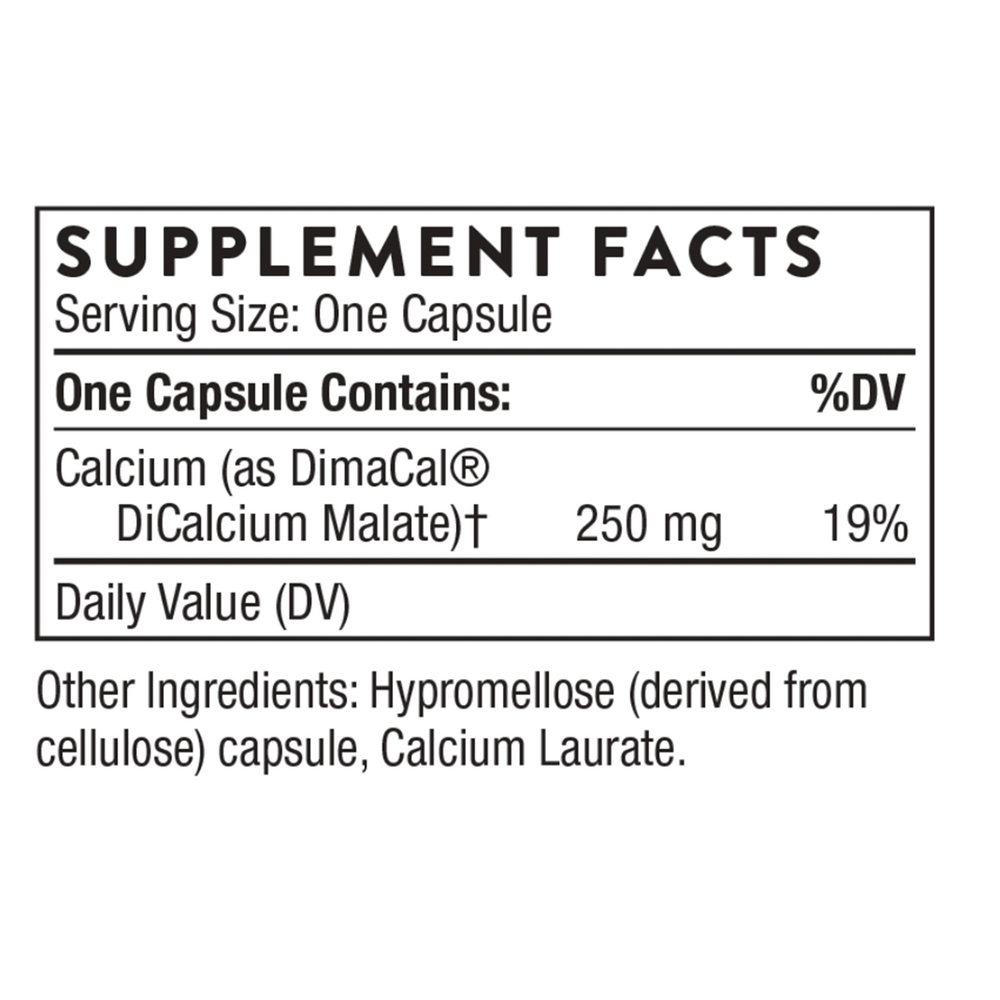
Calcium (formerly DiCalcium Malate)
Size: 120 capsules
- Adults seeking well-absorbed dicalcium malate for daily bone mineral support
- Practitioners protocols requiring a Thorne-quality calcium form with high tolerability
- Individuals maintaining bone density who prefer malate-bound calcium over carbonate forms
- Brand Trust — 32% of verified reviews
About Thorne - Calcium (formerly DiCalcium Malate)
Thorne's Calcium delivers elemental calcium in a dicalcium malate form — a chelated compound bonded to malic acid that supports absorption and digestive tolerability compared to calcium carbonate. Designed to support bone density, muscle function, and nerve signaling, it's a practical option for adults monitoring dietary calcium intake.
Why It's Worth Considering: Thorne's dicalcium malate formulation is a practitioner-trusted form that tends to be gentler on the GI tract, and Thorne's manufacturing standards include NSF Certified for Sport verification across their facility.
Why Gabriel Recommends This
How to Take
Who Benefits
Best For
- Adults seeking well-absorbed dicalcium malate for daily bone mineral support
- Practitioners protocols requiring a Thorne-quality calcium form with high tolerability
- Individuals maintaining bone density who prefer malate-bound calcium over carbonate forms
- Those supporting muscle and nerve function with a research-informed calcium compound
Cautions
- Known allergy to any ingredient (check label)
- Currently pregnant or breastfeeding (consult healthcare provider)
- Taking prescription medications (check for interactions)
- Under 18 years of age (unless recommended by pediatrician)
Frequently Asked Questions
-
Store in a cool, dry place away from direct sunlight. Most supplements are stable at room temperature (59-77°F). Keep the bottle sealed between uses. Check the label for any specific storage requirements — some probiotics and oils require refrigeration.
-
Most supplements can be taken together safely. However, some minerals compete for absorption (zinc and iron, calcium and magnesium) and should be taken at different times of day. If you're taking prescription medications, consult your healthcare provider about potential interactions.
-
Most supplements benefit from consistent daily use over 2-3 months to achieve full effect. Some (like vitamins and minerals) can be taken indefinitely as part of a daily routine. Others (like specific herbs) may benefit from cycling. Follow the product's recommended protocol or consult a practitioner.
-
Fat-soluble supplements (vitamins A, D, E, K, omega-3, CoQ10) should be taken with a meal containing fat. Water-soluble supplements (B vitamins, vitamin C) can be taken anytime. Minerals are generally best absorbed with food. Probiotics should be taken with or just before a meal. Check the product label for specific timing recommendations.
-
Track your specific health goals — energy levels, sleep quality, joint comfort, digestion, mood, etc. Most supplements take 2-8 weeks for noticeable effects. For objective measurement, baseline lab tests before starting (and repeat at 3 months) provide definitive evidence. The Gabriel Score incorporates clinical evidence for expected outcomes.
Real Reviews. Real Sources.
Compatibility Guide
Works Well With
Take Separately From
Research Behind This
Practitioner Insights
Who This Is For
✓ Great For
⚠ Important Notes
† These statements have not been evaluated by the Food and Drug Administration. This product is not intended to diagnose, treat, cure, or prevent any disease.
Ask Gabriel
Want me to suggest complementary products, or do you have a specific health goal in mind?