GI Repair Nutrients, 120 Capsules
GI Repair Nutrients by Vital Nutrients is a targeted gastrointestinal support formula combining L-glutamine, deglycyrrhizinated licorice (DGL), aloe vera, and arabinogalactan to support intestinal mucosal integrity and digestive comfort.


May be a fit for
- Adults seeking to support intestinal mucosal lining integrity with L-glutamine
- Individuals using NSAIDs or other agents that may challenge gut epithelial tissue
- Practitioners protocols requiring zinc carnosine and aloe-based GI barrier support
Save together with Wellness Circles
Invite friends or family to a Wellness Circle. Your group can unlock savings together. See current tiers and terms before joining.
Explore Wellness CirclesA closer look.
GI Repair Nutrients by Vital Nutrients is a targeted gastrointestinal support formula combining L-glutamine, deglycyrrhizinated licorice (DGL), aloe vera, and arabinogalactan to support intestinal mucosal integrity and digestive comfort. Formulated for individuals seeking practitioner-grade nutritional support for gut lining health.
Why It's Worth Considering: Vital Nutrients' commitment to third-party testing and rigorous manufacturing standards makes this a practical choice for clinicians and health-conscious individuals who prioritize verified ingredient quality in gastrointestinal formulas.
 Vital Nutrients · 120 Capsules
Make it part of your routine.
Take 3 capsules 3 times daily with each meal
Or as directed by your healthcare professional.
Important cautions & interactions
Warning: If you are pregnant or lactating, taking medication or have a medical condition, consult your healthcare practitioner before use.
Product details
Supplement facts & complete label
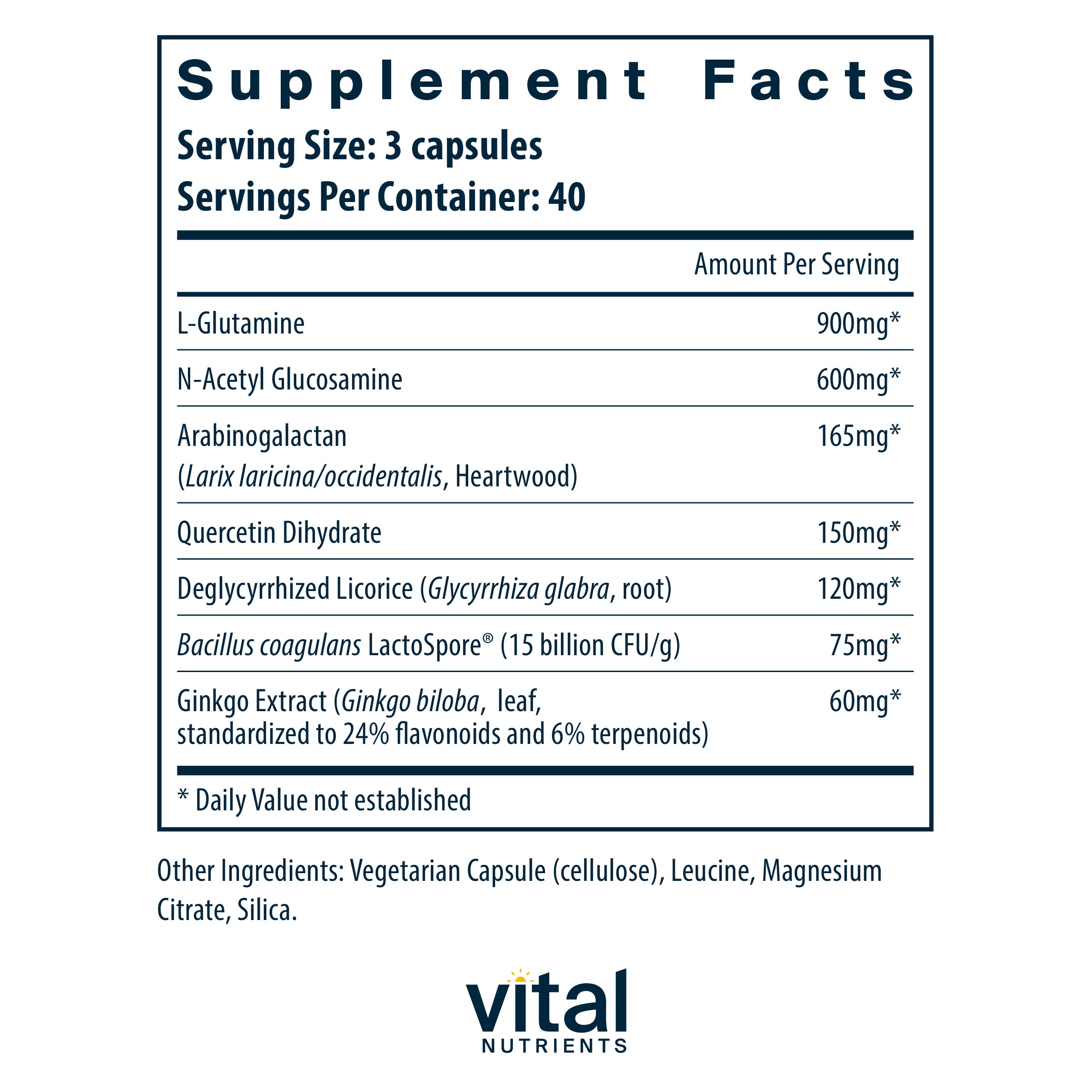
Supplement Facts — Serving size: 3 capsules. Servings per container: 40.
L-Glutamine: 900 mg.
N-Acetyl Glucosamine: 600 mg.
Arabinogalactan (Larix laricina/occidentalis, heartwood): 165 mg.
Quercetin Dihydrate: 150 mg.
Deglycyrrhizinated Licorice (Glycyrrhiza glabra, root): 120 mg.
Bacillus coagulans LactoSpore® (15 billion CFU/g): 75 mg.
Ginkgo Extract (Ginkgo biloba, leaf, standardized to 24% flavonoids and 6% terpenoids): 60 mg.
Daily Value not established.
Other ingredients: vegetarian capsule (cellulose), leucine, magnesium citrate, silica.
Contains: Lobster, Crab, and/or Shrimp.
Label directions
Take 3 capsules 3 times daily with each meal
Or as directed by your healthcare professional.
Label cautions
Store sealed in a cool dry place. Keep out of reach of children. Use only if safety seal is intact.
Warning: If you are pregnant or lactating, taking medication or have a medical condition, consult your healthcare practitioner before use.
Source: Vital Nutrients manufacturer label and directions; authorized supplier cautions · September 06, 2026. Formulas and labels can change. Check the packaging you receive.
Who it may suit
May be a fit for
- Adults seeking to support intestinal mucosal lining integrity with L-glutamine
- Individuals using NSAIDs or other agents that may challenge gut epithelial tissue
- Practitioners protocols requiring zinc carnosine and aloe-based GI barrier support
- Those supporting healthy gut permeability during periods of dietary or digestive stress
Considerations
- Fish/shellfish allergy (use algal omega-3 instead)
- Taking blood thinners (consult physician — may enhance effect)
- Scheduled surgery within 2 weeks (may increase bleeding)
- Bleeding disorders
Compatibility & interactions
Works Well With
Take Separately From
No significant interactions identified. Always consult your healthcare provider.
What to expect over time
Cell Membrane Integration
EPA/DHA incorporate into cell membranes
Inflammation Markers
Measurable CRP reduction
Joint & Mood
Reduced joint stiffness, improved mood
Cardiovascular
Triglycerides reduced 15-30%
Based on clinical research on EPA/DHA supplementation at therapeutic doses (2-4g combined EPA+DHA).
Compare the options
Compare Omega-3 Sources
Fish Oil vs Krill vs Algal vs Cod Liver
| Feature | Fish Oil (this) | Krill Oil | Algal Oil | Cod Liver Oil |
|---|---|---|---|---|
| EPA+DHA Content | High (concentrated) | Moderate | Moderate-High | Moderate + Vit A/D |
| Absorption | Good (triglyceride form) | Excellent (phospholipid) | Good | Good + fat-soluble vitamins |
| Best For | Therapeutic dose, heart/brain | General wellness | Vegan option | Vitamin A+D + omega-3 |
| Sustainability | Varies by brand | Sustainable harvest | Most sustainable | Traditional, sustainable |
| Burp Factor | Low (if enteric coated) | Very low | None | Moderate |
Explore complementary products
 Nordic Naturals - Vitamin D3 5000, 120 SoftgelsTake D3 with fish oil for 30-50% better absorption. Both reduce inflammation through complementary pathways.$25.99
 Pure Encapsulations - Curcumin, 60 CapsulesOmega-3 + curcumin target inflammation through different mechanisms (COX/LOX vs NF-kB). Powerful synergy for joint pain.$33.99
 Pure Encapsulations - Vitamin E, 90 SoftgelsFish oil is susceptible to oxidation. Vitamin E protects EPA/DHA from oxidative damage and extends shelf stability.$37.99
Real reviews. A wider perspective.
Customer reviews, social conversations and expert insights, with every source in view.
- Marketplaces & brand websites
- Amazon, iHerb and direct brand reviews
- Social & community
- Reddit, X, Instagram and TikTok
- Video & creators
- YouTube and creator perspectives
Coverage varies by product and brand.
These are broader practitioner and research perspectives. They may discuss the brand or other products, rather than this exact formula.
A few useful answers.
Research & further reading
More category questions
How much fish oil should I take daily?
For general health, 1-2g of combined EPA+DHA daily. For therapeutic use (triglycerides, inflammation, mood), 2-4g combined EPA+DHA. Check the label for EPA+DHA content per serving — many fish oils have only 300mg per 1000mg capsule, requiring 6-8 capsules for a therapeutic dose. Concentrated formulas provide 600-900mg per capsule.
What is the difference between EPA and DHA?
EPA (eicosapentaenoic acid) is primarily anti-inflammatory — best for joint pain, cardiovascular health, and mood disorders. DHA (docosahexaenoic acid) is structural — it comprises 40% of brain polyunsaturated fats and is critical for cognitive function, eye health, and fetal development. Most people benefit from both; higher EPA for inflammation, higher DHA for brain health.
Does fish oil cause fishy burps?
Low-quality fish oil can cause fishy aftertaste and burping. Solutions: take with food, choose enteric-coated capsules, refrigerate the bottle (slows breakdown), or use a concentrated triglyceride-form fish oil (higher quality = less burping). If you still experience burps, the oil may be oxidized — check the expiration date and smell the capsule.
Is krill oil better than fish oil?
Krill oil has better absorption per gram (phospholipid form) and contains astaxanthin (antioxidant), but it's significantly more expensive per mg of EPA+DHA. For therapeutic doses (2-4g EPA+DHA), fish oil is more practical and cost-effective. Krill oil is a good choice for general wellness at maintenance doses.
Can I take fish oil with blood thinners?
Fish oil has mild blood-thinning properties. If you're taking warfarin, aspirin, or other anticoagulants, consult your physician before starting high-dose omega-3. At standard doses (1-2g), the risk is low, but your INR may need monitoring. Stop fish oil 1-2 weeks before scheduled surgery.
How do I choose a quality fish oil?
Look for: third-party tested for heavy metals and oxidation (IFOS 5-star rated), triglyceride form (not ethyl ester), high EPA+DHA per capsule (600mg+ combined), and molecular distillation for purity. The Gabriel Score evaluates all of these quality signals automatically.
Supplement information is provided for education and is not a substitute for personalized medical advice. Supplements are not intended to diagnose, treat, cure or prevent disease. Read the current product label before use.