Hyperbiotics IBS Support Probiotic, 30 Capsules
Vital Nutrients Hyperbiotics IBS Support Probiotic is a targeted probiotic formula designed to support gut microbiome balance and digestive comfort in individuals experiencing occasional digestive irregularities.


May be a fit for
- Adults seeking probiotic support for occasional digestive discomfort and irregularity
- Individuals with sensitive GI systems looking for IBS-specific probiotic strains
- Practitioners protocols requiring targeted probiotic support for IBS symptom management
Save together with Wellness Circles
Invite friends or family to a Wellness Circle. Your group can unlock savings together. See current tiers and terms before joining.
Explore Wellness CirclesA closer look.
Vital Nutrients Hyperbiotics IBS Support Probiotic is a targeted probiotic formula designed to support gut microbiome balance and digestive comfort in individuals experiencing occasional digestive irregularities. Formulated with strains selected for their relevance to intestinal health, it may help maintain a balanced gut environment for those seeking digestive support.
Why It's Worth Considering: Vital Nutrients is a practitioner-grade brand known for rigorous third-party testing and quality controls; this formulation pairs probiotic strains with a delivery mechanism intended to support survivability through the digestive tract.
 Vital Nutrients · 30 Capsules
Make it part of your routine.
Take 1 capsule per day on an empty stomach
Or as directed by your healthcare professional.
Important cautions & interactions
If you are pregnant, lactating, taking any medications, or have any medical condition, consult your healthcare practitioner before use.
Product details
Supplement facts & complete label
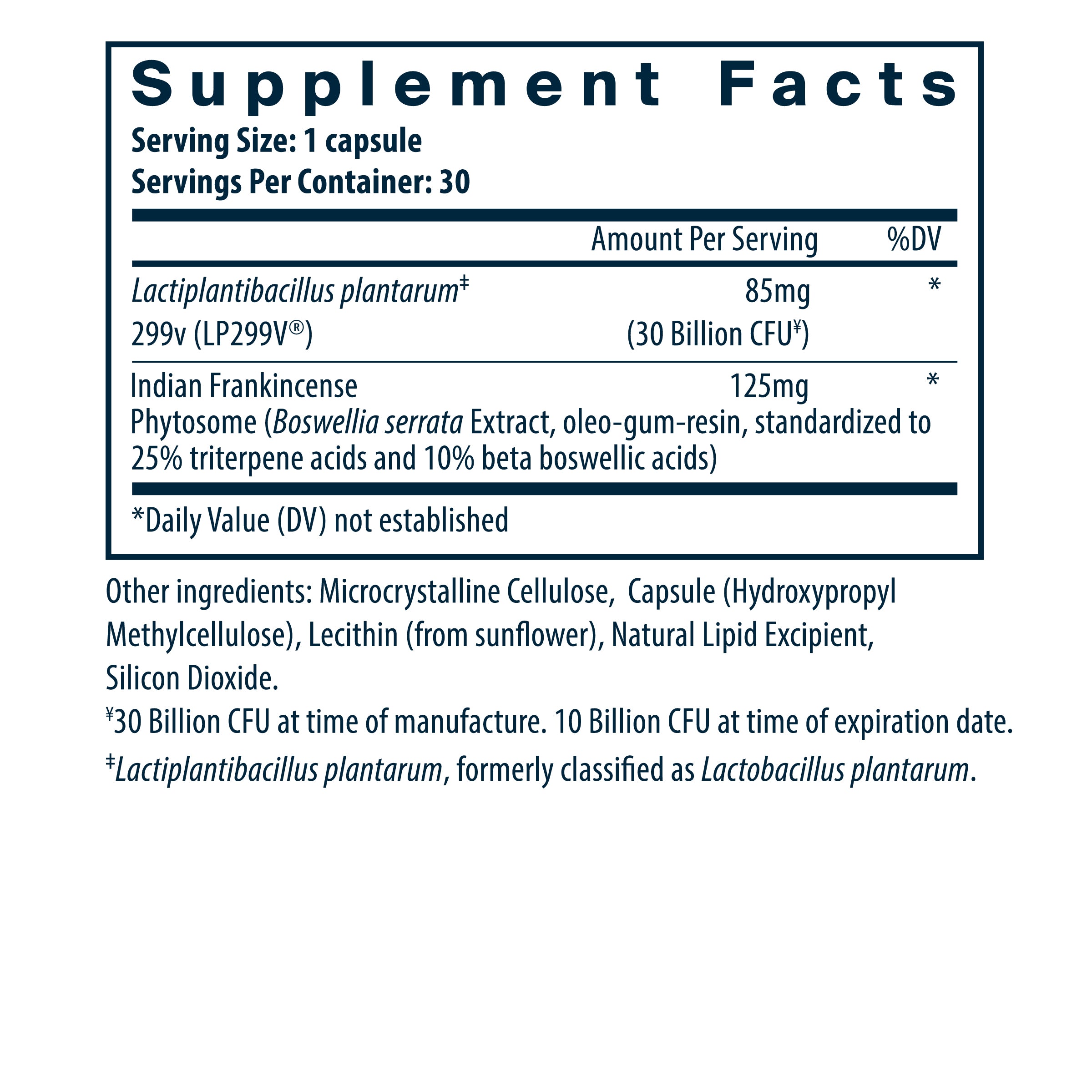
Supplement Facts — Serving size: 1 capsule. Servings per container: 30.
Lactiplantibacillus plantarum 299v (LP299V®): 85 mg (30 billion CFU at time of manufacture; 10 billion CFU at time of expiration date).
Indian Frankincense Phytosome (Boswellia serrata extract, oleo-gum-resin, standardized to 25% triterpene acids and 10% beta boswellic acids): 125 mg.
Daily Value not established.
Other ingredients: microcrystalline cellulose, capsule (hydroxypropyl methylcellulose), lecithin (from sunflower), natural lipid excipient, silicon dioxide.
Lactiplantibacillus plantarum was formerly classified as Lactobacillus plantarum.
Label directions
Take 1 capsule per day on an empty stomach
Or as directed by your healthcare professional.
Label cautions
Warning:
If you are pregnant, lactating, taking any medications, or have any medical condition, consult your healthcare practitioner before use.
Source: Vital Nutrients manufacturer label and directions; authorized supplier cautions · September 06, 2026. Formulas and labels can change. Check the packaging you receive.
Who it may suit
May be a fit for
- Adults seeking probiotic support for occasional digestive discomfort and irregularity
- Individuals with sensitive GI systems looking for IBS-specific probiotic strains
- Practitioners protocols requiring targeted probiotic support for IBS symptom management
- Those seeking to maintain healthy gut microbiome balance with IBS-formulated cultures
Considerations
- Severely immunocompromised (consult physician)
- Active pancreatitis
- Central venous catheters (risk of translocation)
- SIBO (some probiotics may worsen — consult practitioner)
Compatibility & interactions
Works Well With
Take Separately From
No significant interactions identified. Always consult your healthcare provider.
What to expect over time
Colonization Begins
Beneficial bacteria begin establishing colonies
GI Improvement
Reduced bloating, improved regularity
Immune Modulation
Enhanced immune markers, fewer infections
Microbiome Shift
Sustained diversity improvement
Based on clinical probiotic research. Initial die-off symptoms (temporary bloating) may occur in the first week.
Compare the options
Compare Probiotic Types
Which strain type is right for you?
| Feature | Multi-Strain (this) | Spore-Based | Saccharomyces | Single-Strain |
|---|---|---|---|---|
| Survivability | Moderate (refrigerate) | Excellent (shelf-stable) | Excellent (yeast-based) | Moderate |
| Best For | General gut health | Antibiotic recovery | Diarrhea, C. diff | Targeted conditions |
| CFU Range | 10-100 billion | 2-5 billion (potent) | 5-10 billion | 1-50 billion |
| Research | Extensive | Growing | Strong (S. boulardii) | Strain-specific |
Explore complementary products
 Metabolic Maintenance - BioMaintenance™ Prebiotic + Fiber, 378 gPrebiotics are food for probiotics. Taking them together (synbiotic approach) increases colonization success by 3-5x.$55.99
 Thorne - Advanced Digestive Enzymes (formerly Bio-Gest), 180 CapsulesEnzymes break down food while probiotics optimize the microbiome. Together they address both mechanical and microbial digestion.$56.99
 Thorne - L-Glutamine Powder, 513 gGlutamine repairs intestinal permeability (leaky gut) while probiotics restore microbial balance — the two pillars of gut healing.$67.99
 Metagenics - Zinc Carnosine Complex, 60 TabletsZinc carnosine protects and heals the stomach and intestinal lining, creating a healthier environment for probiotic colonization.$65.99
Real reviews. A wider perspective.
Customer reviews, social conversations and expert insights, with every source in view.
- Marketplaces & brand websites
- Amazon, iHerb and direct brand reviews
- Social & community
- Reddit, X, Instagram and TikTok
- Video & creators
- YouTube and creator perspectives
Coverage varies by product and brand.
These are broader practitioner and research perspectives. They may discuss the brand or other products, rather than this exact formula.
A few useful answers.
Research & further reading
More category questions
How many CFU do I need in a probiotic?
For general health maintenance, 10-20 billion CFU is sufficient. For therapeutic use (post-antibiotics, IBS, immune support), 50-100 billion CFU is recommended. More important than CFU count is strain diversity and survivability — a 5 billion spore-based probiotic may be more effective than a 100 billion conventional strain that doesn't survive stomach acid.
Should I take probiotics with food or on an empty stomach?
Take with food or within 30 minutes of eating. Food buffers stomach acid and increases probiotic survival by up to 100x. A small amount of fat in the meal further improves survival. Exception: spore-based probiotics (Bacillus strains) are acid-resistant and can be taken anytime.
Can probiotics cause bloating at first?
Yes — temporary bloating, gas, or changes in bowel habits during the first 3-7 days is common and actually a positive sign. This 'die-off' reaction occurs as beneficial bacteria displace harmful organisms. If symptoms persist beyond 2 weeks, reduce the dose by half and gradually increase.
Do I need to refrigerate probiotics?
It depends on the strain. Most Lactobacillus and Bifidobacterium strains require refrigeration for viability. Spore-based probiotics (Bacillus) and Saccharomyces boulardii are shelf-stable. Check the label — if it says 'viable at time of manufacture' rather than 'at time of expiration,' refrigerate.
Can I take probiotics with antibiotics?
Yes — in fact, it's strongly recommended. Take the probiotic 2-3 hours apart from the antibiotic dose (so the antibiotic doesn't kill the probiotic). Saccharomyces boulardii is particularly resistant to antibiotics. Continue probiotics for at least 2-4 weeks after completing the antibiotic course.
How long should I take probiotics?
For acute use (post-antibiotics, traveler's diarrhea), 4-8 weeks minimum. For chronic conditions (IBS, immune support), ongoing daily use is recommended. Probiotics don't permanently colonize — they exert benefits while you take them and for a limited time after stopping. Think of them as a daily maintenance supplement, not a one-time fix.
Supplement information is provided for education and is not a substitute for personalized medical advice. Supplements are not intended to diagnose, treat, cure or prevent disease. Read the current product label before use.